A 75-minute webinar for instructional designers and L&D leaders
Brick Maier | Director of Enterprise Learning and Development | March 2026
| ~8 min | Context | The cost shift, what's already happening in L&D |
| ~20 min | Claude Code | What it is, the ecosystem, tool stack, dev cycle, pricing, CLAUDE.md |
| ~25 min | Live Demos | Video Maker, Rewiring America Calculator, HeatSpring Production |
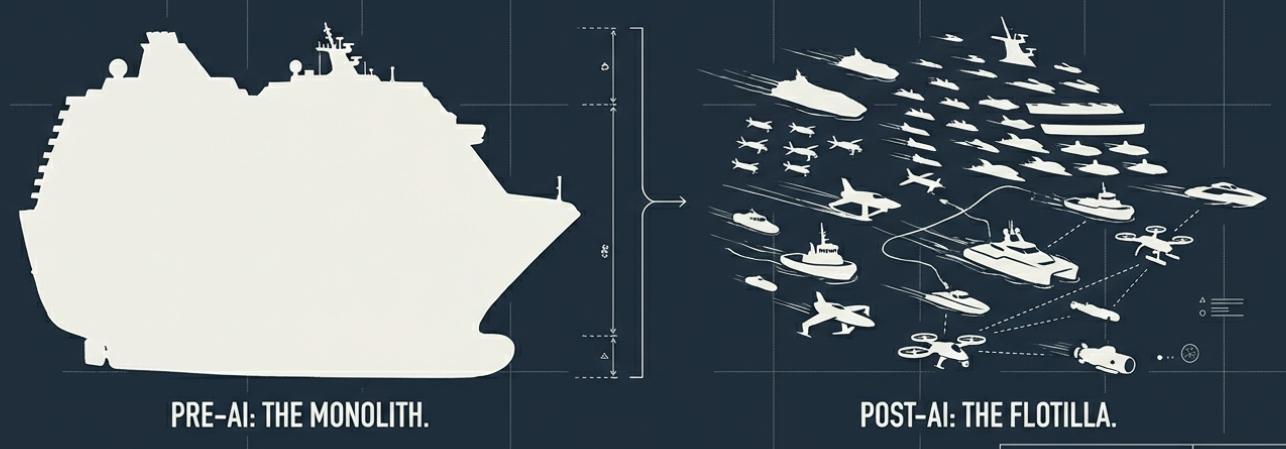
| ~12 min | Framework | TDD, vocabulary mapping, SaaS vs personal software, flotilla model |
| ~10 min | Closing + Q&A | First steps, resources, open discussion |
Building software used to be expensive. You paid for engineers, infrastructure, time. That cost is collapsing. Three people at StrongDM now build what took a 10-person team 18 months ago. Midjourney runs on 11 people and $200M in revenue.
The expense shifted. A bad spec now produces a bad deliverable in hours instead of months — and the rework cycle to fix it burns the same weeks it always did. AWS launched Cairo to force testable specifications before any code is generated. The bottleneck is no longer building. It's defining what to build.
The cost moved from dollars and tokens to time and rework. The people who write clear specs avoid the rework.
Dr. Philippa Hardman's Substack piece "The Rise of the Full-Stack LXD" maps this shift in detail — worth reading after this session.
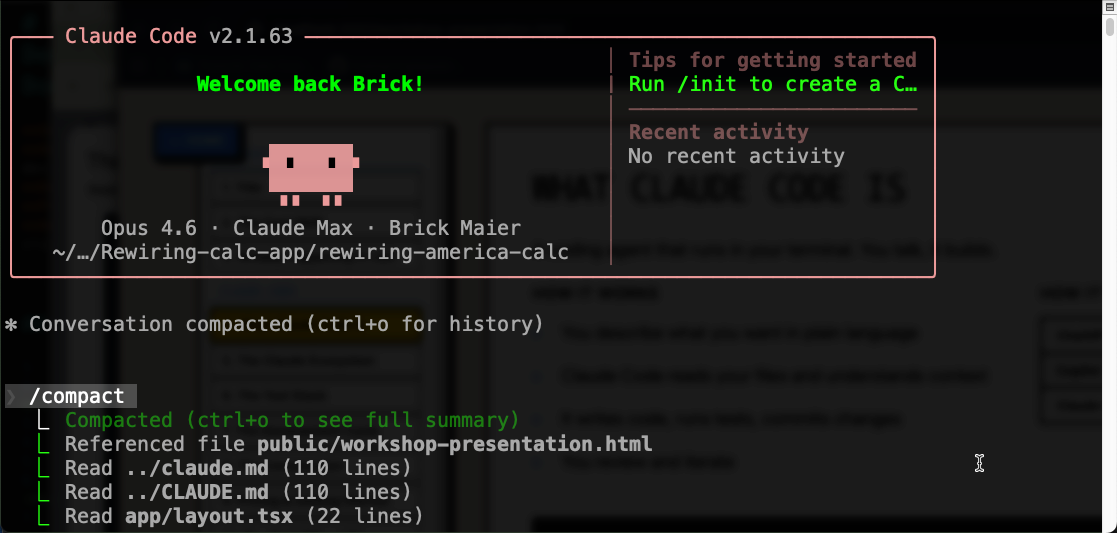
A coding agent that runs in your terminal. You talk, it builds.
CLAUDE.md = your standing instructions. Loaded into every conversation. Defines rules, constraints, project context.
| ChatGPT | You copy/paste code |
| Copilot | Autocompletes as you type |
| Claude Code | An agent that acts on your codebase |
Three ways to work with Claude. Each trades convenience for control:
The chat interface at claude.ai. You type a prompt, Claude responds. Good for writing, research, analysis, brainstorming. No access to your local files.
Access: Browser tab. Chat based with in-browser asset creation.
Desktop application. Chat interface plus local file access plus a built-in proxy to Claude Code. The middle ground — GUI convenience with some local reach.
Access: Desktop app. Mouse-driven with file picker.
Terminal tool. No GUI. Direct access to commands, files, git, and your full development environment. Every action is a typed instruction — no mouse, no menus, no navigation overhead.
Access: Terminal. Keyboard only. Maximum throughput.
This session focuses on Claude Code. CLI tools are faster because every action is a direct instruction — no clicking through menus, no dragging files, no waiting for interfaces to load. That efficiency compounds across a full build session.
AI coding agent — reads, writes, tests, and commits code from your terminal
Version control — every change is tracked, every version recoverable
Deployment — push code to GitHub, Vercel puts it live in 60 seconds
Web framework — what Claude Code uses to build the actual app
You don't need to memorize this stack. Claude Code handles the technical details. You need to understand what each piece does so you can steer.
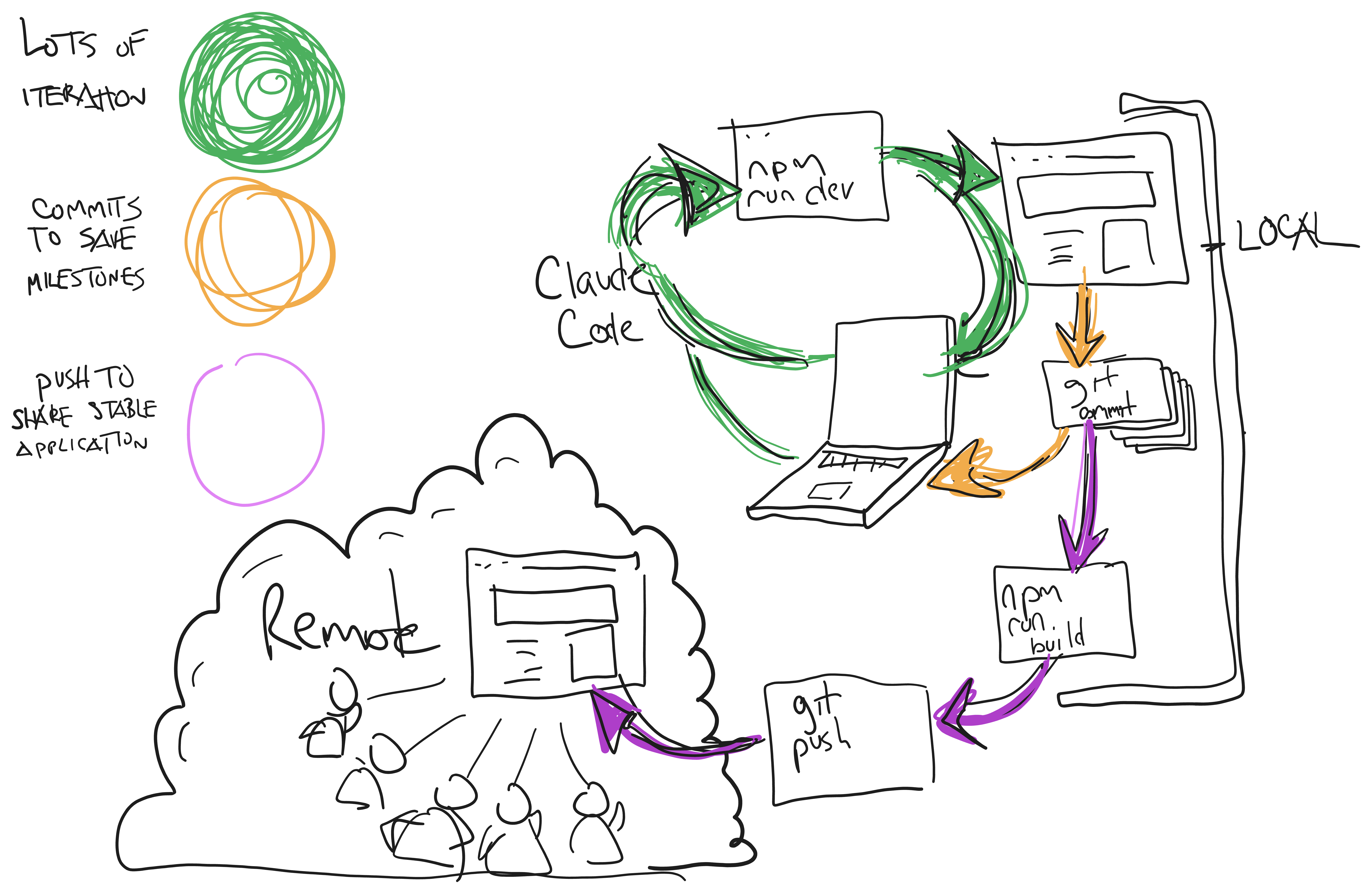
npm run dev # Visit http://localhost:3000
Claude Code writes the code. You see it live locally.
npm test
Automated checks that the code does what you specified.
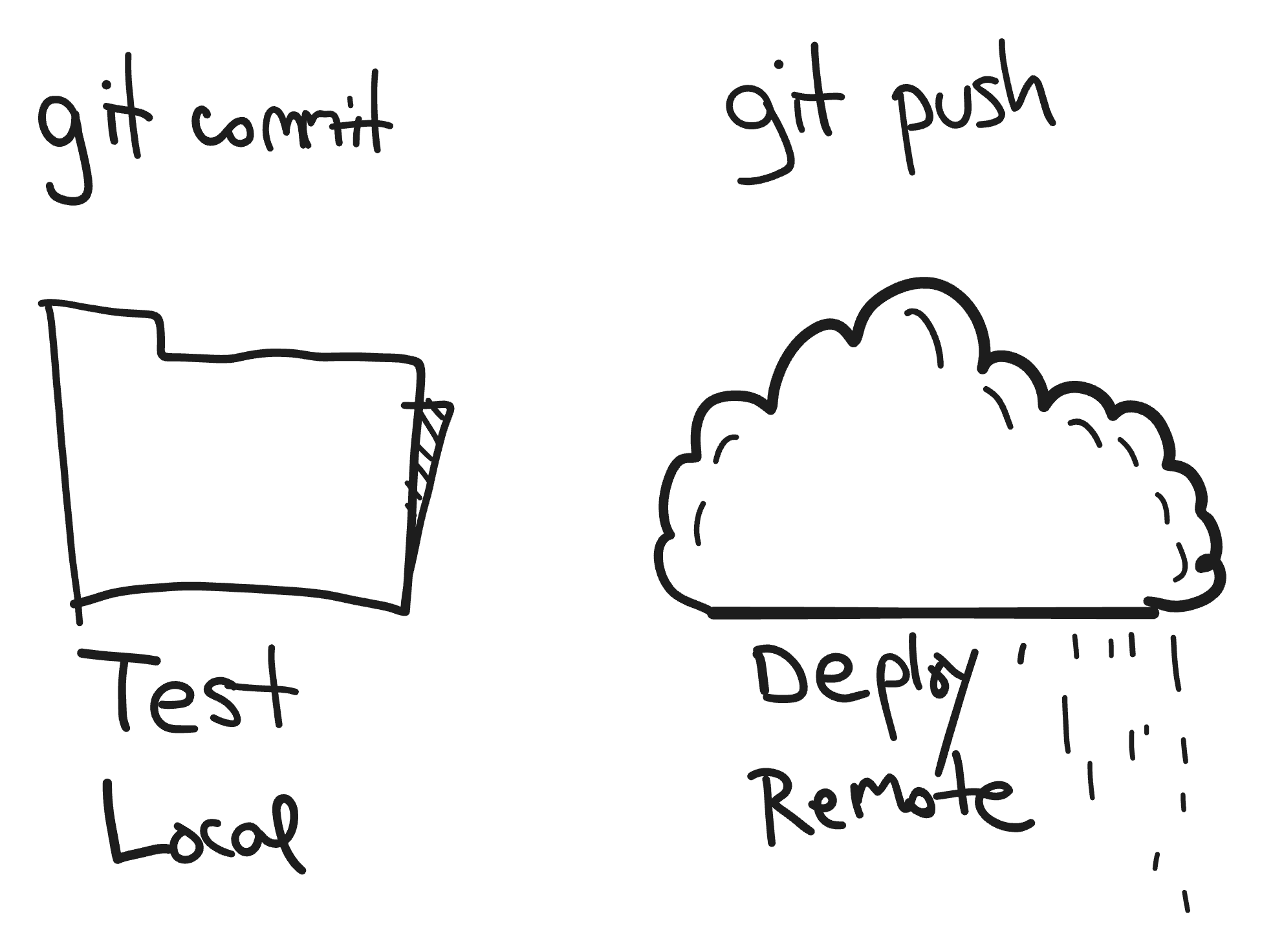
git add . git commit -m "message" git push origin main
Vercel detects the push → builds → deploys (~60 sec)
Click the thumbnails above to see the full workflow diagrams.
What working with Claude Code actually looks like.
You:
"Add a fuel type selector with radio buttons for natural gas, propane, fuel oil, and electric. Update the API call to pass the selected fuel type."
Claude Code:
I'll add a fuel selector component. Let me:
1. Read the current form component...
2. Create FuelSelector with radio buttons...
3. Update the API route to accept fuel type...
4. Run tests... All 24 tests passing.
You steer, Claude Code builds. It proposes an approach, you approve before it writes anything.
| Plan | Cost | Usage | Models |
|---|---|---|---|
| Pro | $20/mo | 5x free capacity | Opus 4.6, Sonnet 4.6, Haiku 4.5 |
| Max 5x | $100/mo | 5x Pro capacity | All models + priority access |
| Max 20x | $200/mo | 20x Pro capacity | All models + priority access |
Opus 4.6 — most capable, best for complex projects. Sonnet 4.6 — scores within 1.2% of Opus on coding benchmarks at 5x less cost. Users preferred Sonnet 4.6 over the previous flagship Opus 4.5 59% of the time.
The planning document Claude Code reads before it writes a single line. This is where the real design work happens.
Next.js + Vercel — deployed web app
Flask + Python — local app
Claude Code is only as good as the brief you give it. A vague CLAUDE.md produces vague software. A precise one produces exactly what you asked for.
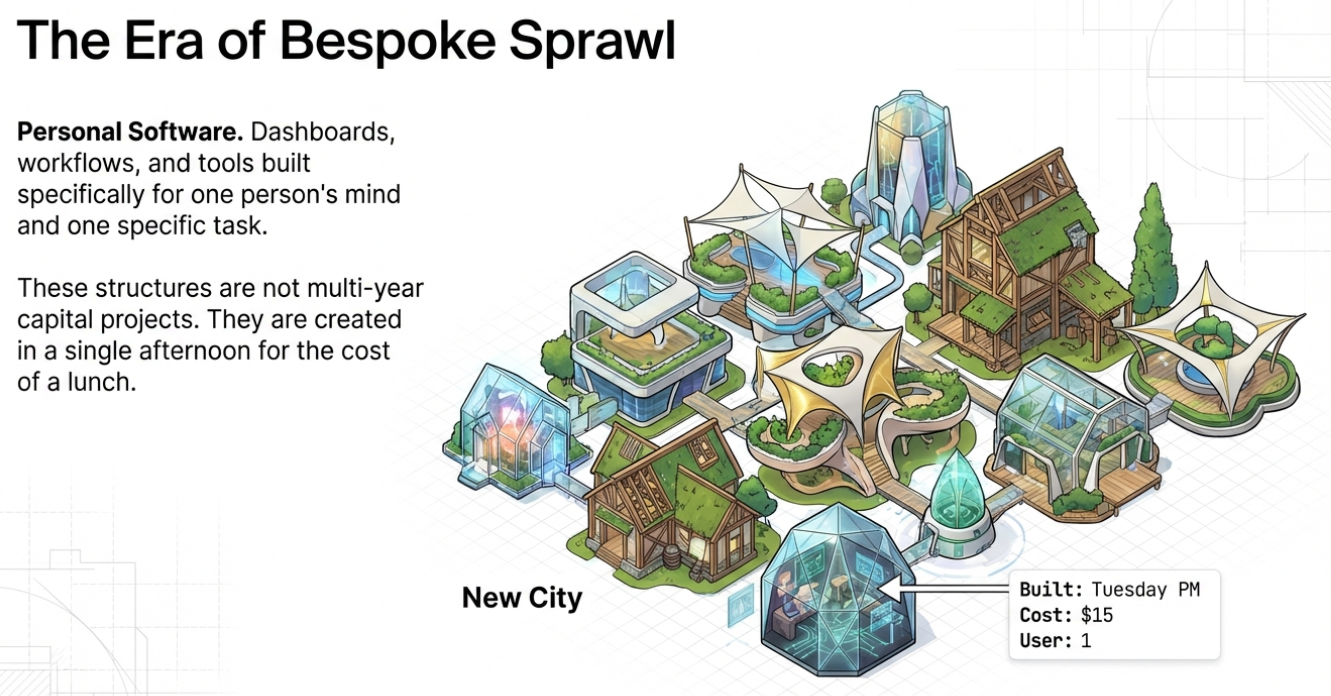
Local Personal Software
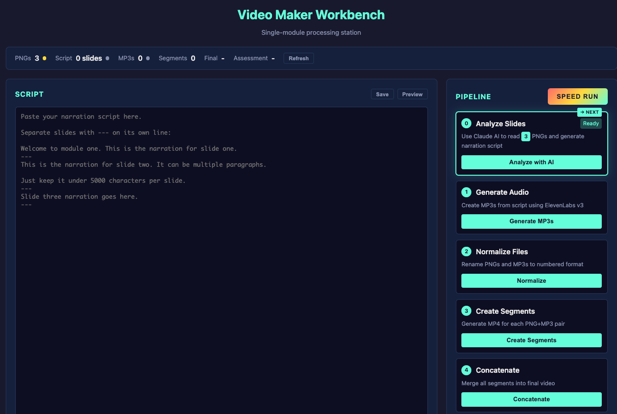
Canva PNGs → Claude script → ElevenLabs TTS → FFmpeg assembly → MP4
localhost:5001Personal software. One person's workflow. No deployment.
Deployed Web App
CLAUDE.md → Claude Code builds → Tests pass → Git commit → Vercel auto-deploys
Click to copy prompt
Add a monthly savings breakdown below the annual savings result. Show a 12-month bar chart using simple HTML/CSS (no chart library) where each bar represents one month's savings (annual / 12). Include month labels (Jan-Dec) below each bar. The bars should be yellow (#ffd900) with black borders matching the app's neo-brutalist style. Write the test first.
Claude in a Live Learning Platform
Claude deployed into a production environment serving real learners.
Live tab switch. This demo walks through the actual HeatSpring platform — not a slide deck, not a mockup.
Test-Driven Development: Write the test BEFORE the code.
You wouldn't approve a course without checking it against learning objectives. TDD is the same thing, automated.
// From the Rewiring America project:
test('calculates savings for valid address', async () => {
const response = await POST(mockRequest);
const data = await response.json();
expect(response.status).toBe(200);
expect(data.annualSavings).toBeDefined();
expect(data.annualSavings.mean).toBeGreaterThan(0);
});
Engineering teams and L&D teams solve the same problem with different terminology:
| Your Daily Work | Engineering Equivalent |
|---|---|
| Writing learning objectives | Acceptance criteria |
| "What does success look like?" | Test specifications |
| Scoping a project with constraints | Architectural planning |
| Structuring content for comprehension | System design |
Click table for the full list →
The specification skills that steer AI development are the skills you practice every day. The gap is tooling, not ability.
Runs on your machine. If it breaks, only you are affected. Lower risk. (e.g., Video Maker)
Lives on the web. If it's public, you're the support team. Higher responsibility. (e.g., Rewiring Calculator)
npm install -g @anthropic-ai/claude-code
Build a tool for YOUR workflow. Something only you need.
Define what "done" looks like before you start building.
Brick Maier | Director of Enterprise Learning and Development
| Your Daily Work (ID/LXD) | Engineering Equivalent |
|---|---|
| Writing learning objectives | Writing acceptance criteria |
| Defining "what does success look like?" | Writing test specifications |
| Scoping a project with constraints | Architectural planning |
| Structuring information for comprehension | System design |
| Planning document / course blueprint | Specification / requirements doc |
| CLAUDE.md file (standing instructions) | Configuration / project manifest |
| Checking course against learning objectives | Test-driven development (TDD) |
| Saving a checkpoint you can return to | Git commit |
| Publishing / making available to learners | Deployment |
| Connecting to external data or services | API integration |
| The conversation window for Claude Code | Terminal / CLI |
| Managing multiple AI tools on a project | Agent orchestration |
| Quality assurance / reviewing AI output | Code review |
Extraordinary pricing power. The person who can take a vague business need and translate it into a spec is the new center of gravity in the organization.
Being commoditized. If your professional value proposition is "I know how to work Moodle" or "I'm fast in Storyline," that's increasingly a claim AI can match.
"It absolutely is a skill issue — it's a learnable skill." — Nate B. Jones
git commit is a checkpoint you can return toGit is the tool, GitHub is the platform. Git tracks changes locally; GitHub stores them in the cloud.
Cloud platform for deploying web applications
1. Connect: Link your GitHub repository to Vercel
2. Detect: Vercel automatically detects when you push code
3. Build: Runs your build process in the cloud
4. Deploy: Makes your app live at a public URL (~60 seconds)
Push to GitHub → Vercel builds and deploys automatically. No server configuration needed.
Next.js is a React-based web framework for building full-stack web applications.
You won't need to learn this. Claude Code writes the Next.js code for you. But it helps to know what it is when Claude Code mentions it.
How code goes from your local machine to production
The complete development cycle from coding to deployment
An agentic AI coding assistant that works through your terminal
| Tool | What It Does |
|---|---|
| ChatGPT | Answers questions, writes text. You copy/paste code. |
| Copilot | Autocompletes code as you type. Line-by-line suggestions. |
| Claude Code | An agent that acts on your codebase. Reads, writes, tests, deploys. You steer, it builds. |
The CLAUDE.md file is your standing instructions.
It's loaded into every conversation. It defines your rules, your constraints, your project context. A permanent brief to a very fast developer who never forgets.
Cost: $20/month with Claude Pro subscription. Install: npm install -g @anthropic-ai/claude-code
If the AI writes code AND tests, "all tests pass" can become a gamed metric. The AI optimizes for green, not for correct. Goodhart's Law: when the measure becomes the target, it stops being a good measure.
Human stays in the loop at steps 1, 3, and 5. Tests-first means the test is written against the spec, not the implementation. Imperfect checkpoint beats no checkpoint.